
TL;DR: Local SEO for Franchises
- Every franchise location needs its own Google Business Profile — one shared profile will not rank in multiple cities.
- Duplicate location pages actively suppress each other in Google’s algorithm. Unique content per location is non-negotiable.
- NAP inconsistencies across directories are one of the most common and most fixable reasons franchise locations underperform in local search.
- Reviews are a top-three local ranking factor. Each location needs its own review generation system, not a brand-level campaign.
- A franchise that looks strong nationally can have three locations that have never appeared in a local 3-pack.
Franchise businesses face a local SEO problem that most corporate marketing teams discover too late: Google does not rank your brand. It ranks your locations one by one, on their own merits.
A nationally recognized name helps with trust once a customer lands on your page. But it does nothing for the Google Maps 3-pack in Mississauga, the local pack in Calgary, or the “near me” results in Edmonton.
Those rankings are earned location by location, through signals that have nothing to do with how well-known your brand is nationally.
According to Google, 76% of people who search for something nearby visit a business within 24 hours, and 28% of those searches result in a purchase.
According to Macro Digital’s 2026 SEO research, 46% of all Google searches carry local intent. That is nearly half of all search volume, and every one of those queries is an opportunity for your franchise locations either to show up for or hand to a competitor.
This guide covers the full local SEO framework for franchise businesses, built around the 7-Pillar Franchise Local SEO Framework we use at Macro Digital when auditing and scaling multi-location clients.
The 7-Pillar Franchise Local SEO Framework
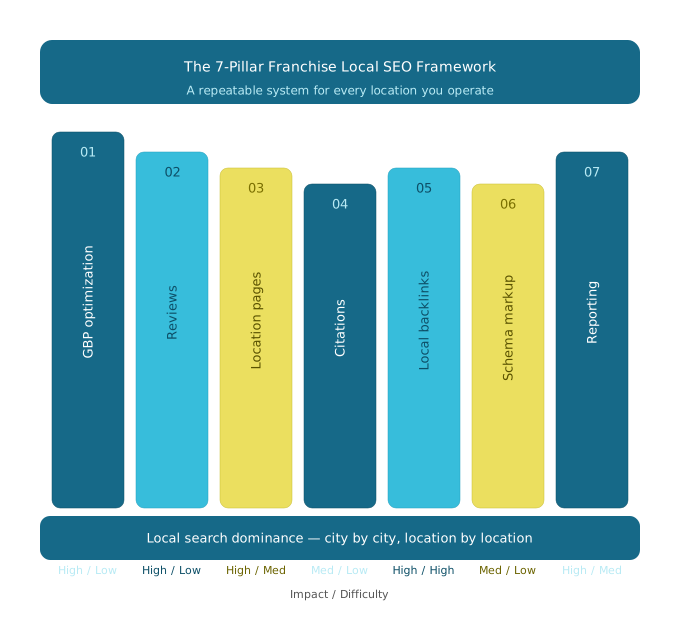
Most franchise SEO guides cover individual tactics in isolation.
This guide organizes them into a single repeatable framework you can apply to every location you operate, whether you have five branches or fifty.
| Pillar | Focus Area | Impact | Difficulty |
| 1. GBP Optimization | Google Business Profile setup and management | High | Low |
| 2. Reviews | Velocity, recency, responses, automation | High | Low |
| 3. Location Pages | Unique content, on-page SEO, local signals | High | Medium |
| 4. Citations | NAP consistency across directories | Medium | Low |
| 5. Local Backlinks | Community links, press, partnerships | High | High |
| 6. Schema Markup | Structured data on every location page | Medium | Low |
| 7. Reporting | Location-level tracking and dashboards | High | Medium |
Each pillar builds on the others. A location with a perfect GBP but no reviews will underperform one that has both.
A location with great reviews and a duplicate page will lose ground to one with original content.
The framework only works when all seven are running in parallel.
What Is Local SEO for Franchises?
Local SEO for franchises is a strategy that helps each physical location rank in city-specific search results, Google Maps, and “near me” queries, independent of how the corporate website performs nationally.
When someone searches “moving company in Toronto” or “dental clinic near me,” Google evaluates each nearby business individually.
It looks at how complete the Google Business Profile is, how relevant and location-specific the website content is, how many quality local reviews exist, and how consistent the business information is across the web.
Your brand’s national authority does not override any of those signals at the local level.
This is where multi-location franchises frequently run into trouble.
The corporate site may have a strong domain authority. But if Location #12 has an incomplete GBP, a copy-pasted location page, and no local reviews, it will lose to a smaller local competitor that has invested in those fundamentals.
According to Macro Digital’s 2026 SEO research, businesses that appear in the Google local 3-pack receive 126% more traffic than those ranking just below it in organic results.
The gap between ranking in the local pack and not ranking in it is not marginal; it is the difference between being found and being invisible.
How Local SEO for Franchises Differs from Traditional SEO
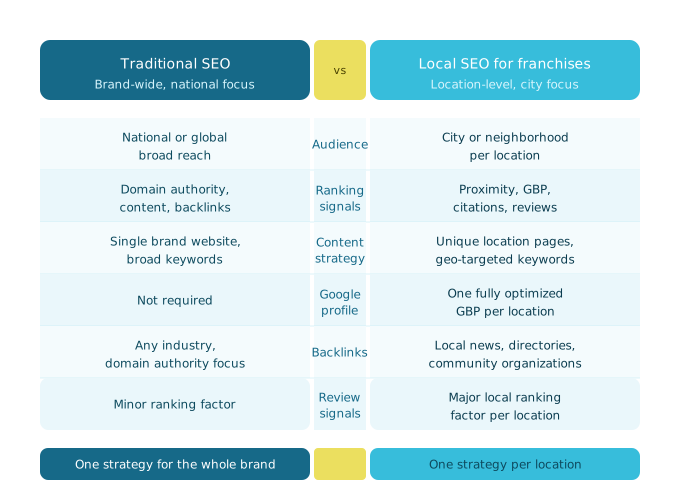
| Factor | Traditional SEO | Local SEO for Franchises |
| Target audience | National or global | City or neighborhood level |
| Primary ranking signals | Domain authority, content, backlinks | Proximity, GBP completeness, citations, reviews |
| Content strategy | Single brand website, broad keywords | Unique location pages, geo-targeted keywords |
| Google profile | Not required | One fully optimized GBP per location |
| Backlinks | Any industry, domain authority focus | Local news, directories, community organizations |
| Review signals | Minor factor | Major local ranking factor per location |
The practical implication: a franchise with 20 locations needs 20 distinct local SEO strategies running in parallel.
You can centralize the framework and the tools, but the execution has to happen at the location level.
Pillar 1: Google Business Profiles, The Foundation of Franchise Local SEO
GBPs power the Maps listings and the 3-pack that appear at the top of local search results.
A fully optimized GBP is often the difference between appearing in local search and not appearing at all.
According to Macro Digital’s 2026 SEO research, 84% of GBP views come from discovery searches, meaning customers found the business by searching for a category, product, or service, not the business name.
That means your GBP is actively acquiring customers who did not know your franchise existed.
An incomplete profile costs you those impressions entirely.
The Setup Steps Franchise Locations Most Often Skip
Create a separate GBP for each location
Use the physical address and local phone number for that specific branch.
Do not use a corporate main line across multiple listings Google needs each location to have a distinct identity and will flag or merge profiles that look like duplicates.
Use a location-specific naming format
Brand Name + City or Neighborhood. Example: “Let’s Get Moving Vancouver.” This is especially important in dense metro areas where multiple franchise branches operate in nearby cities.
Enter NAP data that exactly matches your website and every directory
Even minor inconsistencies, “St.” versus “Street,” a missing suite number, a tracking number that differs from your listed number, erode the trust signals Google uses to validate each location.
Choose categories precisely
The primary category should describe exactly what the business does.
Add secondary categories for related services.
The primary category is one of the strongest signals Google uses for local pack rankings.
Upload photos on an ongoing basis
Profiles with regular photo updates get better visibility.
Each branch needs its own photo set, not the same corporate stock images recycled across all profiles.
Use Posts actively
GBP Posts are one of the most underused features in franchise local SEO.
Posting promotions, seasonal services, and local announcements signals to Google that the location is active.
A profile that has not been posted to in six months looks dormant to the algorithm.
Managing Multiple GBPs Without Losing Control
For franchises with 10 or more locations, Google’s Business Profile Manager allows bulk uploads via spreadsheet and centralized performance tracking.
Tools like Yext, BrightLocal, and Uberall extend this further, letting you sync NAP data across 50-plus directories, monitor accuracy, and push updates in real time.
Assign location-level access to franchisees for day-to-day management without touching corporate admin settings.
Pillar 2: Reviews, The Local SEO Advantage Most Franchise Brands Ignore
Reviews are one of the top three local ranking factors in Google’s algorithm.
Yet most franchise brands treat reviews as a customer service issue rather than an SEO asset.
The locations that win local search consistently are not always the ones with the most reviews; they are the ones generating reviews most consistently.
According to Macro Digital’s 2026 SEO research, businesses with more than 50 Google reviews earn 45% more clicks from local search results than those with fewer than 10.
The impact is not subtle.
What Google Actually Measures in Franchise Reviews
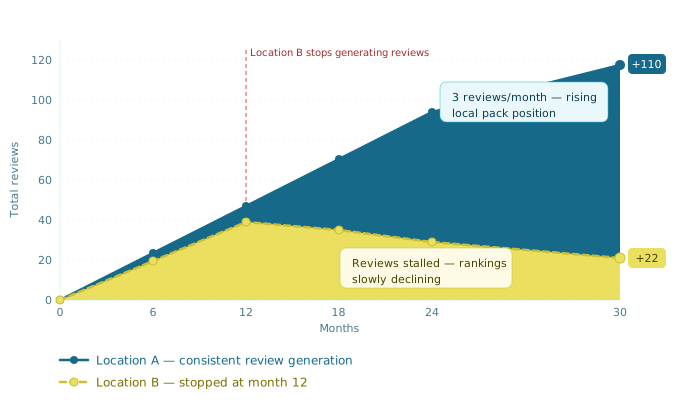
Review velocity.
How frequently are new reviews being added. A location that earned 40 reviews in its first year and has not added one since is being outpaced by a competitor adding three reviews a month.
Google treats review velocity as a signal of ongoing business activity.
Review recency
A five-star rating from three years ago carries less weight than a four-star review from last week.
Fresh reviews signal that the business is current and active. Locations that stop generating reviews, even if their overall rating is strong, gradually lose ground in local pack rankings.
Review responses
Google explicitly recommends that businesses respond to reviews, and the presence of owner responses is a signal the algorithm factors in.
For franchise locations, every positive or negative review should receive a response within 48 hours.
A corporate team cannot realistically manage this across 20 locations. Each branch needs to own its own response process.
Review content and location-specific language
Reviews that mention the city, a local staff member, a specific service, or a neighborhood carry a more local relevance signal than generic praise.
A review that says “the Calgary team was incredible” helps that location page rank for Calgary-specific queries.
Encourage customers to be specific without scripting their responses.
Review Mistakes Franchises Make Constantly
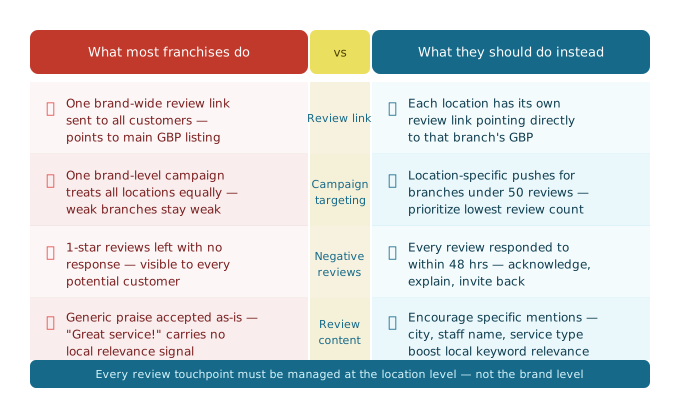
Running one brand-level review campaign
A single email blast from corporate asking all customers to leave a review sends them to the brand’s main Google listing, not the specific branch they used.
Each location needs its own review link directing customers to that branch’s GBP.
Treating all locations equally
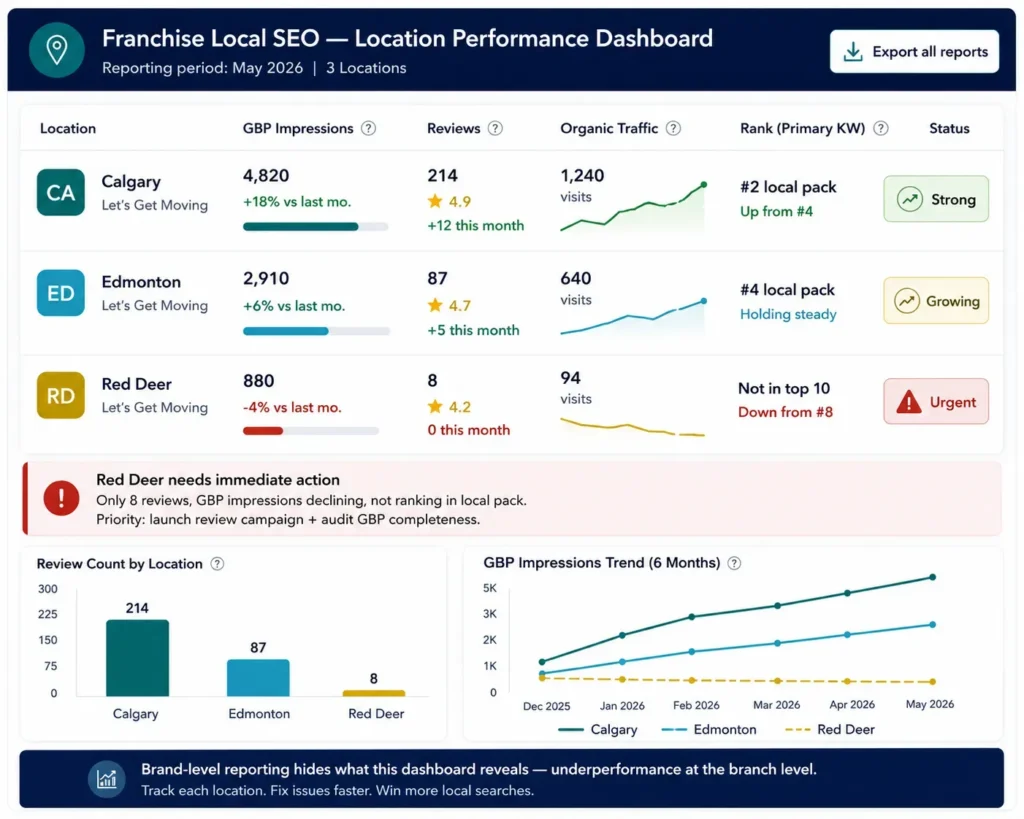
A flagship location in Toronto may have 200 reviews.
A newer location in Red Deer may have eight.
The Red Deer location is the one losing local rankings; it needs an aggressive, location-specific review push, not a share of a brand-wide campaign.
Letting negative reviews sit unanswered
An unanswered one-star review is visible to every potential customer who finds the listing.
A thoughtful response that acknowledges the issue, explains what changed, and invites the customer back demonstrates professionalism and signals to Google that the business is actively managed.
Building a Franchise Review System That Scales
Each location needs a repeatable review generation process tied to the customer touchpoints that already exist: post-service email follow-ups, in-person requests from staff, and post-job SMS messages with a direct link to the branch GBP.
The message does not need to be elaborate.
A simple “We’d love to hear how your experience was here’s a direct link to leave us a Google review” sent within 24 hours of service completion is enough.
Tools like Birdeye, Grade.us, and Podium allow you to automate review requests at the location level, route responses, and track review velocity across all branches from a centralized dashboard.
For franchises managing more than 10 locations, this infrastructure is worth building early.
Pillar 3: Location Pages, Build Content That Earns Rankings for Each Franchise Branch
A “Locations” page with a list of addresses is not a local SEO asset.
Each franchise location needs a standalone landing page with original content, local signals, and full on-page optimization to rank in city-specific searches.
The Duplicate Content Problem Is Worse Than Most Franchises Expect
When 20 locations use the same location page copy, same headline, same body text, same service descriptions with only the city name swapped, Google has no way to differentiate them.
In practice, it either suppresses the weaker ones in rankings or ranks them inconsistently, with some locations appearing for searches in the wrong city.
We have audited franchise sites where identical location pages were actively cannibalizing each other’s rankings across neighboring cities.
What Every Franchise Location Page Needs
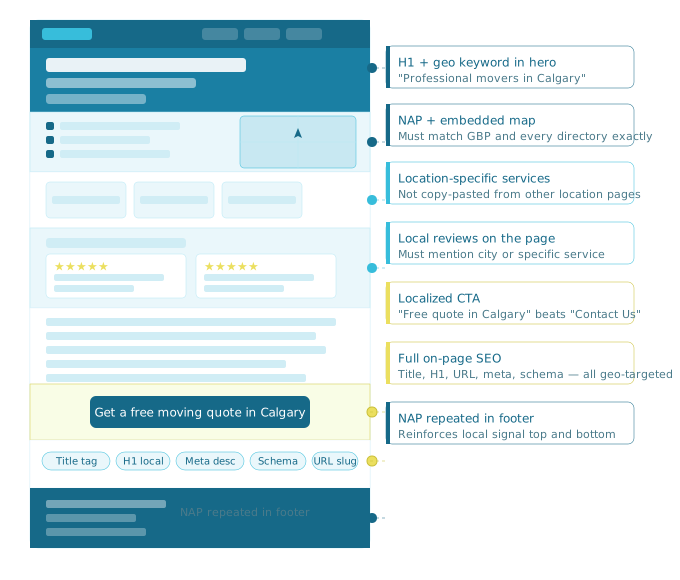
Genuinely unique content
Specific to that location — what neighborhoods it serves, any services unique to that branch, the local team, and local landmarks used as reference points.
Not a template with a mail-merge.
NAP data and an embedded Google Map
Name, Address, and Phone Number are displayed clearly at the top and bottom of the page.
An embedded Google Map is pinned to the exact location.
Both are local relevance signals, and both reduce friction for users verifying the address.
Location-specific reviews
Pull real customer reviews that mention the city or a local detail and display them on the location page. “They handled our local SEO in Calgary, and we started getting calls within the first month” is a local SEO asset.
A generic testimonial is not.
Localized CTAs
“Get a free moving quote in Calgary” outperforms “Contact Us” for both conversions and keyword relevance.
Full on-page SEO
Title tag, meta description, H1, URL slug, and body copy should all target the location-specific keyword:
- Title: Moving Company in Calgary | Let’s Get Moving
- H1: Professional Movers in Calgary
- URL: /locations/calgary-movers/
- Local keywords used naturally in H2 and H3 headings throughout
Pillar 4: Citations, The NAP Foundation of Local SEO for Franchises
NAP: Name, Address, and Phone Number is one of the most foundational local SEO signals Google uses to validate that a business location is real.
For franchises, maintaining consistent NAP data across every platform your locations appear on is infrastructure, not optional maintenance.
When Google crawls the web and finds that a location’s phone number on Yelp does not match what is on the website, or that the address on YellowPages uses a different suite number than the one on the GBP, it loses confidence in the location data. Lower confidence means lower rankings.
The Franchise-Specific NAP Challenge
Franchises face NAP issues that single-location businesses do not. Locations change addresses when they move.
Franchisees use personal cell numbers when setting up a new listing.
The corporation rolls out a call tracking number that differs from the GBP listing.
Old listings from a previous franchisee stay live with outdated information. Each of these compounds across dozens of locations.
From our experience auditing franchise clients, NAP inconsistency is the most common fixable issue, and almost always the one that has been sitting unaddressed the longest because nobody owns it at either the corporate or location level.
Where to Maintain NAP for Franchise Local SEO
Every instance of each location’s business information must match: its GBP, its location page on the website, and every directory listing.
Key directories for Canadian franchise businesses include Yelp, YellowPages, BBB, Apple Maps, Bing Places, Foursquare, and Facebook, as well as industry-specific platforms like HomeStars, Angi, RateMDs, and Houzz.
For larger networks, tools like Yext, BrightLocal, and Moz Local allow you to push NAP updates across 50-plus directories simultaneously, remove duplicate listings, and monitor accuracy from a single dashboard. Assign location managers to audit their listings quarterly.
Pillar 5: Local Backlinks, Building Location Authority for Franchise SEO
Backlinks remain one of the most important ranking factors in local SEO. For franchise locations, local relevance matters more than link volume.
A link from a Calgary community blog, a local chamber of commerce directory, or a city news site carries significantly more weight for Calgary-specific rankings than a generic national link.
“Local backlinks are trust signals at the neighborhood level. When a community organization, local press outlet, or city directory links to your location page, it tells Google that this business is genuinely embedded in that community, not just listed there.” Ahmad Fahim Ludin, Founder, Macro Digital
The Franchise Advantage in Local Link Building
Most independent local competitors are not running organized link-building campaigns.
Franchises that build a scalable local link-building process, even a basic one, can establish a meaningful authority advantage in multiple cities simultaneously.
The key is local execution with centralized coordination: the corporate creates the framework, local franchisees execute because they have the community relationships.
Sponsor local events or charities
Community sponsorships earn backlinks from event websites, often on high-authority .org or .ca domains.
Partner with complementary local businesses
Cross-referral arrangements with non-competing businesses in the same city.
A moving franchise might partner with local real estate agents or storage facilities.
Submit to city-specific directories and chambers of commerce
These reinforce NAP consistency and provide geographically specific backlinks.
Earn local press coverage
Distribute location-specific press releases when a new branch opens, reaches a milestone, or sponsors a community initiative.
Run community awards or scholarship programs
These attract links from schools, universities, and local news blogs with strong domain authority.
Avoid low-quality backlinks from private blog networks or directories with no real traffic. Monitor each location’s link profile using Ahrefs, Moz, or SE Ranking.
Pillar 6: Schema Markup, Structured Data for Every Franchise Location Page
Schema markup is structured data code that helps Google understand the content on your location pages more precisely.
For franchise SEO, adding LocalBusiness schema to each location page reinforces your NAP details, improves your chances of appearing in the local pack and knowledge panel, and gives you an edge in voice search results.
According to Macro Digital’s 2026 SEO research, only 31% of local business websites have properly implemented LocalBusiness schema, which means correct implementation is still a genuine competitive advantage for franchise locations that do it well.
Each location page schema should include: business type, name, full address, local phone number, URL, and opening hours.
Add geo coordinates, business images, price range, social media URLs, and aggregateRating if you have review data. WordPress sites can generate location schema dynamically using Rank Math, Yoast, or Schema Pro tied to custom fields, build the template once, and it populates correctly for every location page. Validate each implementation using Google’s Rich Results Test.
Pillar 7: Reporting, Track Local SEO Performance for Every Franchise Location Separately
Measuring franchise SEO performance at the brand level is one of the most reliable ways to miss real problems.
Strong performance from Toronto or Vancouver routinely masks underperformance in mid-size cities where franchises often have the most room to grow.
Local SEO Priority Matrix for Franchise Reporting
| Priority | Signal | Impact | Difficulty | Review Frequency |
| 1 | GBP Impressions and Actions | High | Low | Monthly |
| 2 | Review Velocity and Rating | High | Low | Monthly |
| 3 | Location Page Organic Traffic | High | Medium | Monthly |
| 4 | Local Keyword Rankings | High | Medium | Monthly |
| 5 | Citation Accuracy | Medium | Low | Quarterly |
| 6 | Local Backlinks | High | High | Quarterly |
| 7 | Schema Validation | Medium | Low | Quarterly |
What to Track Per Location
Local keyword rankings
Monitor city-specific target keywords for each branch using BrightLocal, SE Ranking, or Whitespark.
Geo-grid tools show exactly where each location ranks within the Google Map Pack across different parts of a city.
GBP Insights
Search impressions, direction requests, website clicks, and phone calls.
A drop in direction requests at a specific location is often the first signal that something has gone wrong with the listing.
Traffic to location pages
Use Google Analytics 4 to track page views, bounce rates, and conversions for each location page individually.
Set up custom events for quote requests, phone click-to-calls, and direction clicks.
Review velocity and ratings
Monitor total reviews, average rating, and how frequently new reviews are being added per location.
A location that stopped generating reviews six months ago is likely losing ground in local pack rankings.
Build a location-level dashboard template in Looker Studio or AgencyAnalytics that can be duplicated for each branch.
Corporate monitors aggregate performance; local managers receive branch-level reports to stay accountable for their own numbers.
Franchise-Wide vs. Location-Level: Finding the Right Local SEO Balance
Every franchise marketing team faces the same tension: maintain brand consistency at the corporate level while giving each location the flexibility to build a genuine local presence.
The answer is a scalable framework that handles both.
Corporate owns: Core website structure, page speed, mobile responsiveness, schema configuration, brand voice guidelines, national link building through PR, and a single analytics setup with location-level segmentation.
Local teams own: Location page content, no two pages are identical. Active GBP management, including review responses, seasonal hour updates, and regular Posts. Community outreach and local link building using corporate-provided templates. Review generation campaigns tailored to each location’s customer touchpoints.
Document every process with clear SOPs. Run periodic content audits at the corporate level.
The franchises that get this balance right compete locally in every market they enter, not just the ones where the brand name carries enough weight on its own.
Your Franchise Is Leaving Local Leads on the Table — Here Is How to Stop It
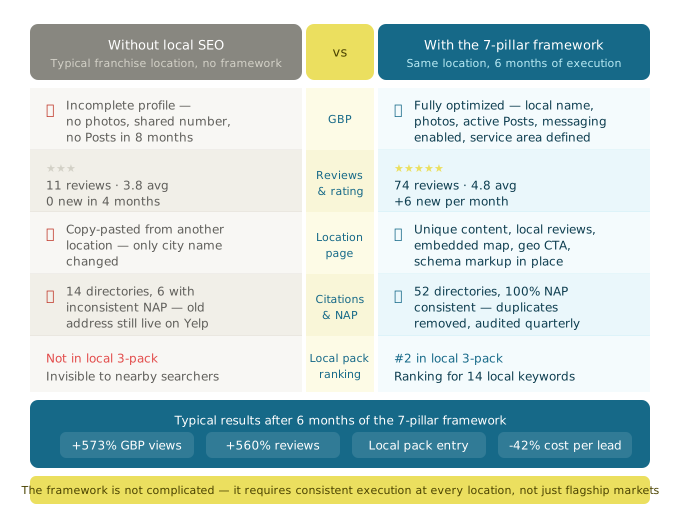
Most franchise businesses that come to us for local SEO are not failing because they lack brand strength.
They are failing because the 7 pillars, complete GBPs, consistent reviews, unique location pages, clean citations, local backlinks, schema markup, and location-level tracking have never been properly executed at the branch level.
The framework is not complicated. But it requires consistent execution at every location, not just the flagship markets.
A location that has never had its GBP properly set up, has a copy-pasted page on the website, and has not generated a new review in three months is not competing in local search, regardless of how strong the brand looks nationally.
If you run a franchise network and want to know exactly which locations are underperforming in local search and why, Macro Digital offers a free multi-location SEO audit.
We pull rankings, GBP performance, citation accuracy, review velocity, and location page quality for every branch and give you a prioritized action plan, not a generic report.
Book your free franchise SEO audit and find out which of your locations are invisible in local search before your competitors do.
Frequently Asked Questions About Local SEO for Franchises
How does local SEO help franchise businesses grow?
Local SEO helps each franchise location appear in search results when customers look for services nearby.
It increases visibility in Google Maps and the local 3-pack, drives high-intent traffic that converts quickly, and lets each branch compete independently in its own market without relying on brand recognition alone to win local customers.
Do I need a separate Google Business Profile for each franchise location?
Yes. Each location must have its own GBP with a unique address, phone number, and local details.
A shared profile cannot appear in Google Maps for multiple cities. Without individual GBPs, your branches have no presence in local pack results for their specific areas.
What is the difference between national and local SEO for franchises?
National SEO targets broad keywords and brand visibility at the domain level.
Local SEO targets specific geographic areas so individual locations rank in city-level results and Google Maps.
A complete franchise SEO strategy needs both: national authority that strengthens the root domain, and local optimization that makes each branch visible in its own market.
How do I stop my franchise locations from competing against each other in search?
The primary cause is duplicate location page content. When locations use the same copy with only the city name changed, Google cannot differentiate them and may suppress or inconsistently rank them.
Write genuinely unique content for each page, customize each GBP, and build separate local backlink profiles by location.
How long does it take to see results from local SEO for franchise locations?
Most locations see measurable ranking movement within 3 to 6 months of consistent optimization.
More competitive markets may take 6 to 12 months for significant organic traffic growth. GBP optimization and review generation tend to produce visible results faster than content and backlink building.
What is the most common local SEO mistake franchise brands make?
Running brand-level campaigns instead of location-level ones.
A single review request email, a shared GBP, or one brand-wide citation audit treats all locations as one entity, which is exactly how Google does not see them.
Every pillar of local SEO for franchises has to be executed at the individual location level to produce real rankings.